Expert Troubleshooting Electricians
Looking for dependable Downers Grove electrician services? Hire a licensed, insured, and bonded pro who secures permits, complies with NEC/local amendments, and arranges inspections. They diagnose tripped breakers, flicker, warm outlets, loose neutrals, and install AFCI/GFCI, surge protection, EV charger circuits, and smart panels. Demand line‑item breakdowns, flat-rate options, documented exclusions, and written warranties (at least one year labor). Check active Illinois license, OSHA training, recent local permits with inspector sign‑offs, and three references. After that, you'll discover exactly how to assess and budget your project.
Important Points
- Employ licensed, bonded, and insured Illinois electricians who secure permits, schedule inspections, and comply with NEC and Downers Grove amendments.
- Request recent Downers Grove permit numbers, inspector sign‑offs, and three local job addresses to confirm trustworthiness.
- Receive transparent, itemized estimates that include labor hours, materials, permit/inspection fees, flat-rate tasks, and documented exclusions.
- Expect safety diagnostics: breaker trip assessment, voltage checks, grounding/bonding confirmation, and mandated AFCI/GFCI upgrades.
- Search for best practices: labeled circuits, torque-tested terminations, surge protection, balanced loads, and a written one-year labor warranty.
Why It Matters to Choose a Licensed, Insured Electrician
Even if a repair seems simple, hiring a licensed, insured electrician safeguards you against code violations, unsafe wiring, and liability. You get documented regulatory benefits: permits pulled, inspections scheduled, and work performed to NEC and local amendments. A licensed professional calculates loads, sizes conductors correctly, and installs proper overcurrent protection, grounding, and GFCI/AFCI devices. That precision stops overheating, nuisance trips, and hidden fire risks.
Insurance and bonding provide Liability coverage. If something fails or a worker gets injured, you're not on the hook-coverage handles it. You additionally receive warranty backing and precise as-built documentation for upcoming improvements. A qualified electrician confirms panel capacity, marks circuits, and completes connections to torque specifications. They conduct tests with calibrated tools, log outcomes, and provide a safe, code-compliant setup.
Warning Signs You Require a Professional Electrical Inspection
If your breakers keep tripping, lights dim or flicker under electrical load, or outlets become warm or give off smells, these are critical warning signals that fail to meet code requirements and raise fire dangers. Don't reset and ignore-these symptoms point to overloads, loose neutrals, or failing connections. Book a professional electrical inspection to locate defects, validate grounding/bonding systems, and fix safety issues according to code standards.
Frequent Breaker Trips
Though a tripped breaker can seem routine, frequent trips indicate a load imbalance, faulty wiring, or a failing breaker that requires a professional inspection. The issue likely involves circuit overloads, a short to ground, or a loose neutral. Repeated resets warm terminals, degrade insulation, and mask underlying hazards. Don't install a higher-amp breaker or "try to fix" the panel; that violates code and heightens fire risk.
A licensed Downers Grove electrician will verify panel labeling, compute loads per NEC Article 220, torque-test lugs to spec, and carry out breaker maintenance: evaluate trip curves, examine bus stabs, and replace defective breakers. The electrician will map circuits, separate dedicated loads (HVAC, microwaves), and rebalance branch circuits to balance phases. As needed, the electrician will install arc-fault and ground-fault protection and suggest a service upgrade.
Flickering or Dim Lights
Detect flickers or dimming and drill down to the cause before it grows hazardous. When lights strobe, don't ignore the signal. Check lamp type and LED compatibility with existing dimmers; mismatched controls cause strobing. Next, check for voltage fluctuation: do lights dip when a motor loads (air conditioning, microwave)? That points to undersized circuits, loose neutrals, or service drop issues. Inspect for over-lamping—bulb wattage must not exceed fixture ratings. Verify tight, listed connections at switches, fixtures, and wirenuts; heat-cycled terminations loosen over time. Look for evenly balanced loads across phases; imbalance will dim some circuits and brighten others. If signs persist across rooms, call a licensed Downers Grove electrician to measure line voltage, test neutrals, tighten terminations, and correct panel or service defects.
Warm Outlets or Unusual Smells
Malfunctioning lights aren't your only concern; warmth and smells near electrical equipment require immediate attention. If you feel a warm outlet, discontinue use immediately and remove the plug. An outlet should remain at ambient temperature during regular operation. Heat points to poor wire contact, circuit capacity issues, improperly secured wires, or defective equipment. The scent of burning points to wire coating failure or electrical sparking-both fire hazards. Avoid resetting circuit breakers multiple times; doing so hides electrical issues.
Do a quick check: gently check the plates, listen for buzzing, observe any discoloration or melted plastic, and verify plug prongs aren't scorched. Avoid extension-cord daisy chains and high-wattage loads on shared circuits. Hire a licensed Downers Grove electrician to assess conductors, tighten lugs to proper torque specs, inspect receptacles, and fix code violations with AFCI/GFCI protection where required.
Standard Home Services Homeowners Count On
You depend on core services like panel upgrades to meet load demands and follow NEC requirements. You also need regulation-compliant lighting installations with adequate grounding, GFCI/AFCI protection where required, and proper fixture ratings. When outlets or wiring stop working, you should schedule repairs that include load evaluation, reliable terminations, and verification with calibrated testers.
Electrical Panel Enhancement
Even when your lights still turn on, an aging or undersized electrical panel won't safely handle modern loads. A modern panel upgrade safeguards your home from overheating conductors, nuisance trips, and fire hazard, while providing capacity for EV chargers, heat pumps, and smart appliances. We examine existing feeders, grounding and bonding, AFCI/GFCI protection, and fault current ratings, then design a code-compliant replacement.
We manage service coordination with the utility, acquire permits, and schedule inspections to reduce downtime. During installation, we identify circuits, address double-lugging, and perform load balancing across phases to decrease neutral current and voltage drop. We also right-size the main breaker, install comprehensive surge protection, and check torque specs. Afterward, you get clear panel schedules and test results for your records.
Lighting Installation Services
From interior spaces to outdoor areas, proper lighting starts with load calculations, appropriate conductor sizing, and listed fixtures suited for the environment. You'll get luminaires rated for damp or wet locations outdoors, and IC/AT housings where insulation is present. We validate switch leg routing, ground connections, and AFCI/GFCI protection as specified in code requirements. For LED retrofits, we select compatible dimmers, verify driver ratings, and maintain correct wattage specifications.
We map out pendant placements with proper spacing over islands and tables, check box fill, and use sturdy support for heavy fixtures. Recessed layouts maintain spacing-to-height ratios to eliminate glare and shadows. Exterior lighting uses weatherproof connections, in-use covers, and photocell or timer control with appropriate overcurrent protection. Before energizing, we inspect polarity, continuity, and function to make certain safe, even illumination.
Socket and Wiring Repairs
In kitchens, bedrooms, and garages, wiring and outlet repairs commence with diagnostic testing and code verification. You'll get mapped circuits, breakers labeled, and load calculations verified. We verify grounding, polarity, and continuity before any GFCI installation in garages, kitchens, bathrooms, and outdoor locations. If we locate knob tube or brittle splices, we advise targeted rewiring with proper wire gauge and AFCI protection to minimize arc fault risks. We check outlet spacing according to room type, incorporate tamper resistant receptacles for safety of children, and match receptacle color to device specifications and trim. Ground continuity gets fixed at the panel and ground rod. We secure terminations, replace faulty yokes, and establish box fill according to code. Finally, we log results and mark updates for future service.
Commercial Electrical Solutions for Operational Continuity
When uptime is nonnegotiable, you need commercial electrical systems engineered for resilience, maintainability, and code compliance. You secure operations by designing for power redundancy, selective coordination, and well-defined emergency protocols. We assess load profiles, balance phases, and size feeders, transformers, and switchgear to NEC and local amendments. You get labeled panels, arc-fault and ground-fault protection, and documented one-line diagrams to accelerate troubleshooting.
We establish monitored ATS logic, generator interlocks, and load-shedding tiers so critical circuits stay energized. You'll receive routine IR scanning, torque checks, insulation testing, and breaker trip-verification schedules. We establish standard conduit fill, grounding electrode systems, and bonding jumpers to minimize fault impedance. With compliant lighting egress, battery backups, and tested transfer drills, you reduce risk, rapidly identify faults, and ensure business continuity.
Enhancements: EV Charging Systems, Smart Panels, and Surge Protection
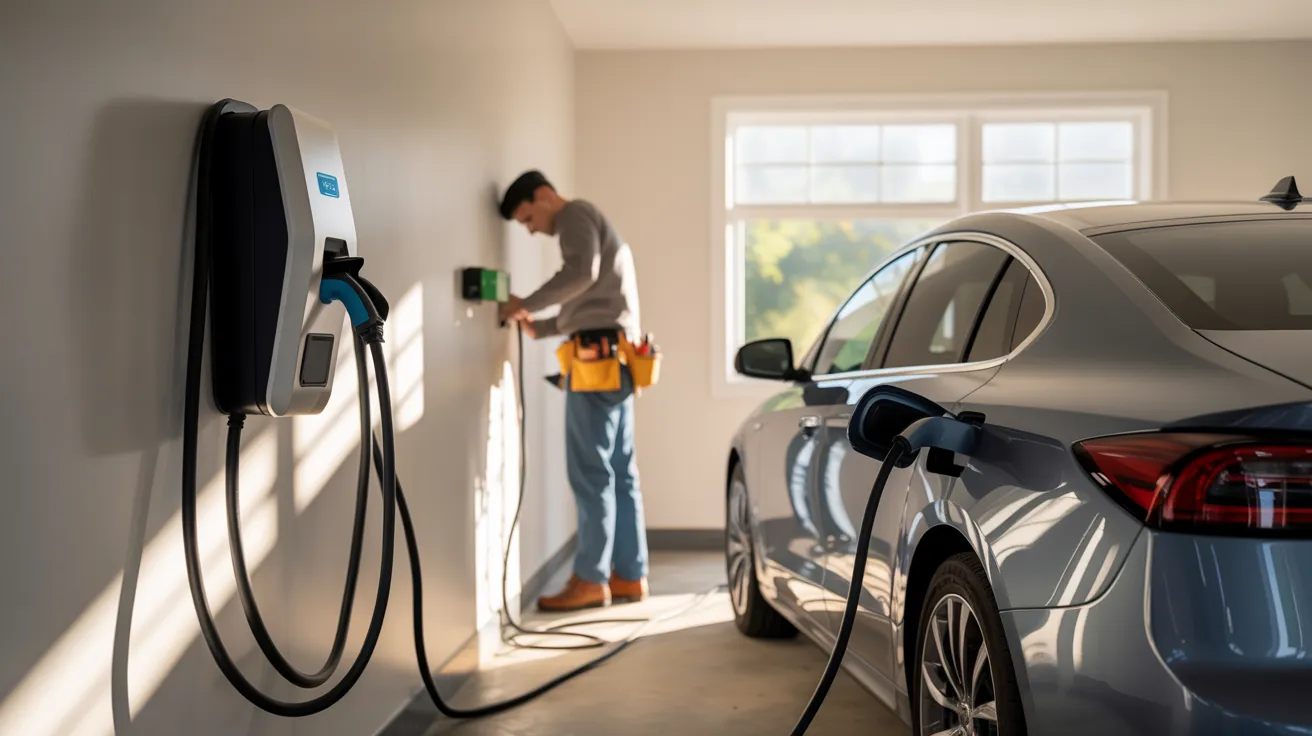
Durable commercial systems establish the baseline; next, you strengthen infrastructure with targeted upgrades: EV charging circuits, smart load centers, and whole-home or facility surge protection. You begin by sizing service capacity, then dedicate circuits for Level 2 EV chargers with appropriate conductor gauge, GFCI where required, load calculations per NEC Article 220, and labeling for future maintenance. You select listed equipment, proper read more ventilation clearances, and networked monitoring for usage analytics and cost reduction.
Smart load centers deliver real-time metering, remote shedding, and arc-fault/ground-fault protection. You establish load priorities, demand limits, and firmware updates on a secure VLAN. For surge protection, you implement Type 1 SPD at the service and Type 2 at subpanels, bond grounding electrodes, reduce lead length, and verify let-through ratings match equipment tolerances.
Upfront Rates, Scheduling, and Coverage Expectations
Lead with a precise scope and point-by-point estimate: materials, labor hours, permit fees, inspection charges, and disposal-every item priced and referenced to code requirements. Ask for flat rate estimates on defined tasks, and document exclusions (drywall fixes, patch painting, utility fees). Confirm who pulls permits and schedules inspections. Demand written change-order procedures for any additional circuits or device count changes.
Confirm scheduling with defined appointment windows, a guaranteed arrival protocol, and a "no-surprise reschedule" policy for weather or utility holds. Verify that technicians are licensed, insured, and comply with NEC, local amendments, and GFCI/AFCI standards.
Expect warranties in writing: labor (at least one year), manufacturer parts by model, workmanship covering terminal points, labeling, and torqueing. Determine what voids coverage, maintenance obligations, and emergency response schedules.
Vetting Local Experts and Understanding Reviews: A Guide
Having pricing, scheduling, and warranties clearly documented, you can vet local electricians using documented credentials. Confirm an active Illinois electrical license, bond and insurance status, and OSHA training. Ask for recent permits pulled in Downers Grove and the inspector sign-offs. Request three previous job sites with scope and dates; conduct customer interviews to assess punctuality, cleanliness, and code compliance.
Conduct complete review verification instead of skimming. Double-check names, dates, and project types across Google, Yelp, and BBB. Note patterns: frequent panel issues, failed inspections, or upselling. Give priority to reviews that reference NEC adherence, AFCI/GFCI installs, load calculations, and permit numbers. Examine responses to complaints-check for documented fixes and timestamped updates. In conclusion, perform a small test task with a written scope, part numbers, UL listings, and pass/fail criteria.
Frequently Asked Questions
Are Downers Grove Electricians Offer After-Hours Emergency Response Times?
Indeed, numerous Downers Grove electricians deliver emergency availability with defined emergency response timeframes. You contact dispatch; on call technicians reply within minutes and confirm ETA. They assess hazards (arcing, outages, tripped main breakers), isolate power, and follow lockout/tagout procedures. Expect fast dispatch, live status updates, and code-compliant repairs. Ask about coverage area, parts stock, surge protection, and panel capacity. Check licensing, insurance, and warranty terms before authorizing work. Safety-first practices reduce downtime and risk.
What Downers Grove Areas Are Covered by Our Standard Service Radius?
The standard service radius includes Maple Grove, Downtown Core, Belmont Terrace, Orchard Brook, Prince Pond, Barth Pond, Fairview, and Oak Hill. Coverage extends to Pierce Downer, Clyde Estates, and Northwest Territory. Response windows and load-priority protocols are clearly defined. Share your precise address, panel amperage, and any access details. Avoid opening panels or resetting breakers if burning smells or arcing are present-turn off the main power and wait for a licensed professional.
Are Electricians Coordinate Mandatory Village Permits and Inspections?
Yes-most licensed electricians handle local permits and inspections throughout the entire process. Similar to a well-orchestrated process, they oversee permit securing, submit load calculations, one-lines, and panel schedules, then coordinate inspection scheduling along with compliance checklists. You'll obtain timelines, fee estimates, and code references (NEC plus municipal modifications). They'll coordinate rough-in and final inspections, remedy redlines, and close permits securely. You remain updated, approve the scope, and keep access clear so work continues without hazards.
Do You Have Access to Bilingual Electricians for Consultations and Walkthroughs?
You can schedule bilingual electricians for walkthroughs and consultations. Request Spanish speaking technicians and specify multilingual support when scheduling. You can expect clear scope reviews, NEC-compliant recommendations, and safety-first checklists. Techs label circuits, document load calculations, and explain GFCI/AFCI requirements in both languages. They will check panel capacity, bonding/grounding continuity, and device ratings, then deliver a written action plan with parts, code references, and timelines. You approve, they execute per permit and inspection protocols.
Which Payment Methods and Financing Options Are Typically Accepted?
You'll generally pay using credit cards, debit, ACH, or checks; some receive cash, others won't. For bigger projects, you'll encounter financing options with determined APRs, same-as-cash promos, or step-by-step progress payments. Quick swipes meet long-term schedules; swift authorization meets breakdown invoices. Validate invoice entries, deposit minimums, and late-fee terms. Verify PCI compliance, encrypted portals, and no saved CVV. Get written approval paths, change-order conditions, and lien-waiver conditions prior to authorization.
Conclusion
You require consistent power and zero guesswork. Engage licensed, insured pros, schedule inspections when lights flicker or breakers trip, and ensure code-compliant installs for EV chargers, smart panels, and surge protection. One stat: the NFPA reports electrical faults cause an estimated 13% of home fires-preventable with proper workmanship and maintenance. Require transparent pricing, clear scopes, warranty terms in writing, and verified reviews. Vet local professionals, confirm permits, and never bypass GFCI/AFCI requirements. Safety first, uptime always.